


Tina Frey Designs: A Guide to Handcrafted Resin Serveware
Tina Frey's pieces look like they were carved from stone or poured from porcelain, then turn out to be light enough to carry across a room with one hand. That combination of sculptural presence and everyday practicality is why her resin serveware has become a quiet favorite with designers and hosts alike. If you're considering your first piece, here's what to know about how it's made, how to care for it, and where to begin.
Who Is Tina Frey?
Tina Frey founded her studio in San Francisco in 2007, after leaving a corporate career to design full time. Every piece starts as a sculpture she shapes by hand in clay. From that original, a custom mold is made, and each item is cast individually by hand in small batches, then sanded and finished by hand. The result is that no two pieces are exactly alike: expect subtle variation in tone and surface, which is part of the appeal rather than a flaw.
The shapes draw on organic forms from nature and objects Tina has collected in her travels, while the colors lean soft and translucent: white, grey, cement, nude, pale rose, and black. You may also see the brand referred to as TF Design.
Take a look inside the studio:
Is Tina Frey Resin Food Safe?
Yes. According to the studio, the resin used in all of its tabletop pieces has been lab-tested to meet FDA food safety standards and is lead-free. Bowls, platters, and serving pieces are made to be used with food, not just displayed.
Is Tina Frey Dishwasher Safe?
This is the question we hear most, and you'll find conflicting answers from different retailers online. We follow the studio's own care guidance: hand wash with mild soap, and keep pieces out of the dishwasher, the microwave, and away from high heat. Serve cold and room-temperature food in them, not anything straight from the oven.
How to Care for Resin
Resin is easy to live with once you know a few habits:
- If a piece looks frosty after washing, rub a tiny drop of vegetable oil over the surface with a soft cloth to bring back the luster. Some people prefer the matte look and leave it; it doesn't affect use.
- For light scratches, use a non-abrasive pad with warm water and mild soap, working in small circles.
- Skip knives and sharp utensils directly on the surface. Slice on a cutting board, then arrange.
- Resin is shatter resistant, which makes it a natural choice for patios, pool areas, and bathrooms. It isn't unbreakable, though, so a hard drop onto tile can still crack it.
For the Table
Tina Frey's serving bowls are where most people start, and where the collection feels most at home.


For Entertaining
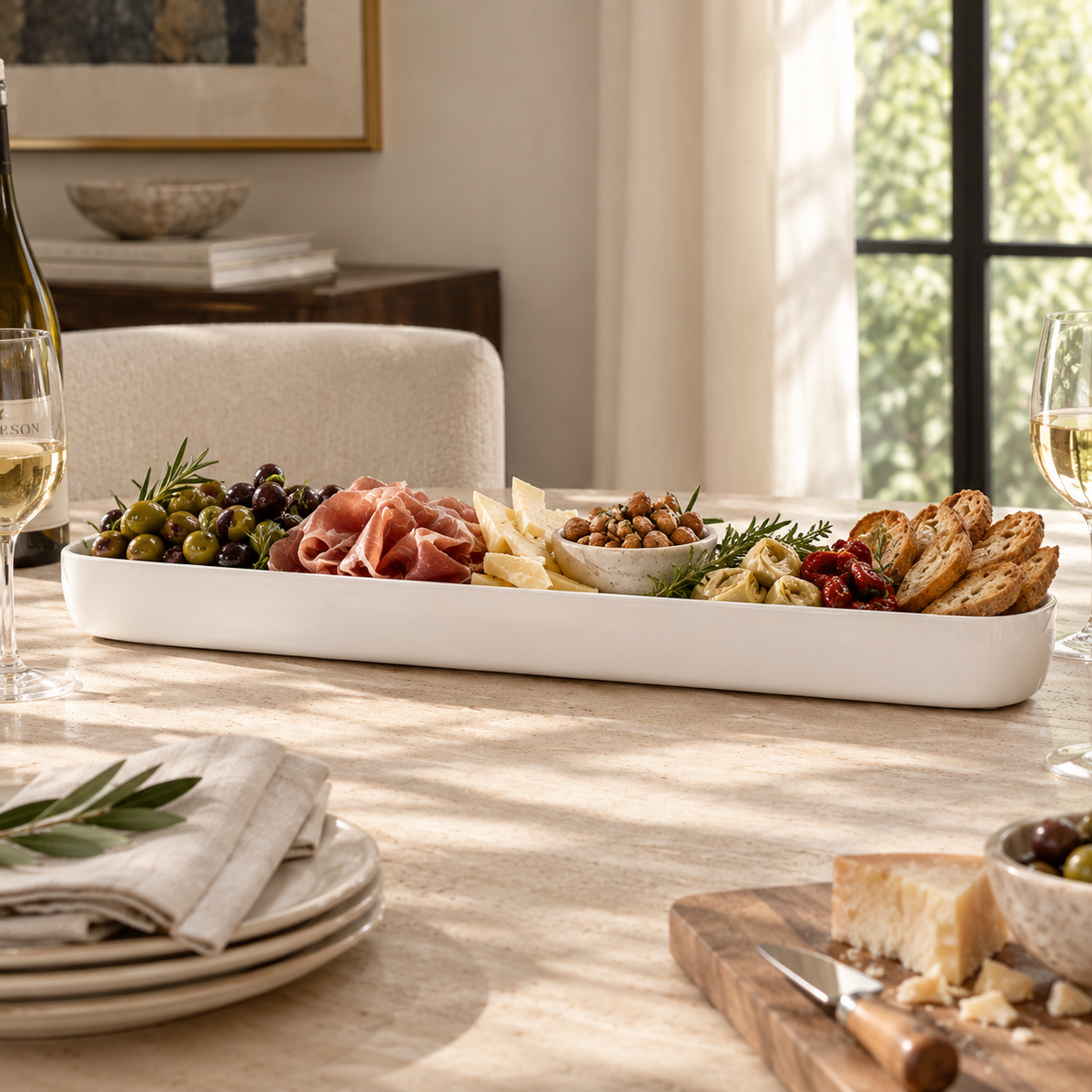
Because resin is light and shatter resistant, it's a practical choice for anything that moves between kitchen, table, and terrace.


Beyond the Table
The same qualities that make resin good for serving make it useful everywhere else in the house, especially rooms with water.


Why Resin, and Why Tina Frey
Resin gets overlooked next to crystal and porcelain, but in the right hands it does something neither can: it's substantial to look at, light to lift, and forgiving on a patio or in a bathroom. Tina Frey's hand-sculpted forms and small-batch finishing are what separate her work from mass-produced resin. Each piece carries the marks of the hands that made it.