

Spotting Authentic Baccarat: Marks, Weight, and What to Look For
Baccarat is one of the most imitated names in fine crystal, which makes sense, given how recognizable the house's cuts are. But it also means the secondhand market, auction sites, and even some "vintage" listings are full of pieces that aren't what they claim to be. If you're about to spend real money on a piece, it's worth knowing what separates the real thing from a convincing copy.
Here's what to actually check.
Look for the Mark
Authentic Baccarat pieces are generally signed, most often with an acid-etched mark on the underside of the base: a small, precise engraving rather than a printed sticker or a crude stamp. The exact style of the mark has changed over the decades, so an older piece won't necessarily carry the same signature as something made today. If a piece has no mark at all, or the mark looks printed, painted on, or oddly placed, treat that as a reason to look closer rather than a dealbreaker on its own, but combine it with the other checks below.
Weight Tells You Almost Everything
Genuine lead crystal is noticeably heavier than ordinary glass of the same size and shape. Pick up a piece and it should feel substantial, almost surprisingly so for its size. If something feels light or hollow in the hand compared to what you'd expect, that's one of the clearest signs you're not looking at full-lead crystal.

A good reference point: pick this piece up in person if you're ever near a Baccarat retailer, and you'll feel exactly the density we're describing, dense, cold, and substantial in a way that's hard to fake.
Clarity and the Way It Catches Light
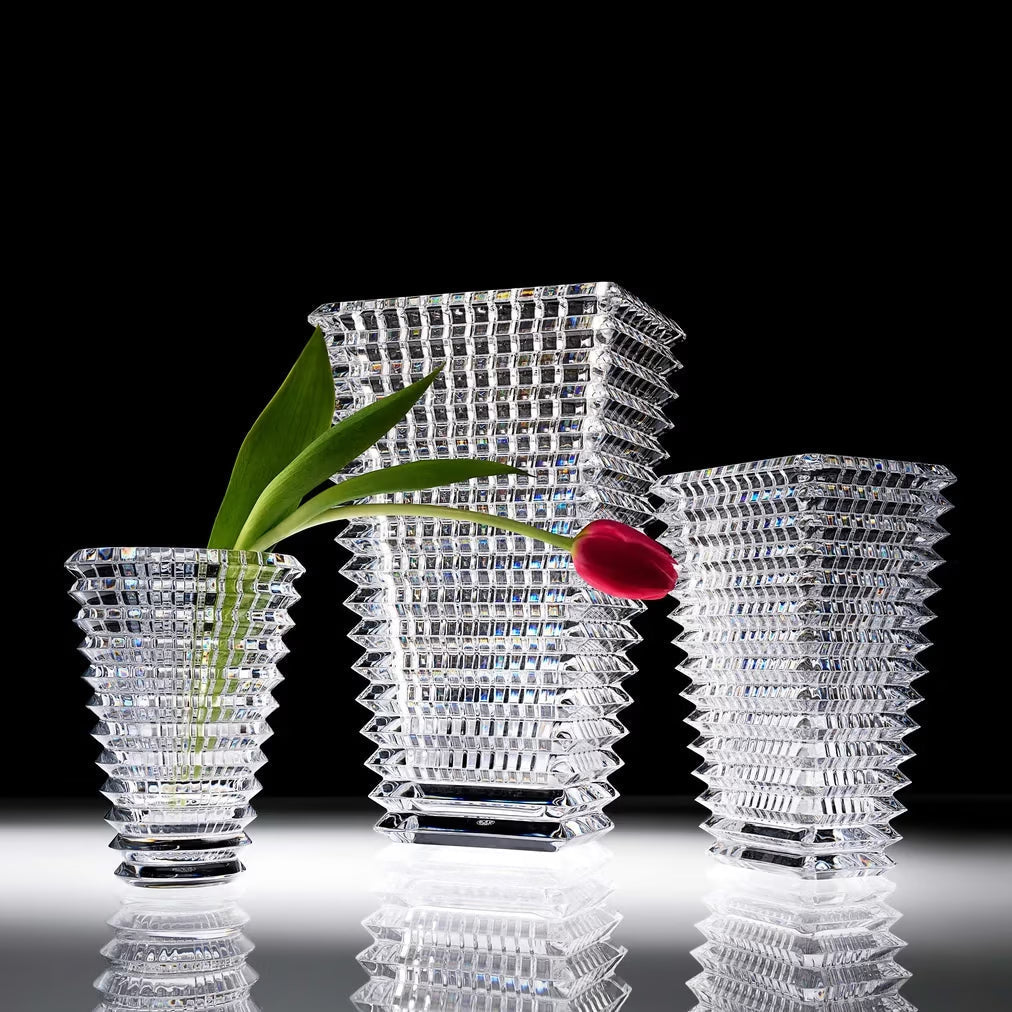
Full-lead crystal refracts light differently than ordinary glass. It throws more color, more sparkle, and sharper prisms when light passes through a cut edge. Hold a piece up and rotate it slowly. Genuine crystal will show a rainbow-like flash at the cut edges; glass tends to look flatter and more uniformly clear, without that same depth.

The Harcourt's faceted cuts make this especially easy to see: each facet should throw a distinct flash of light rather than a soft, even shine.
The Sound Test
This is the classic trick for a reason: gently flick a piece of real crystal near the rim with a fingernail, and it should produce a clear, ringing tone that sustains for a moment, closer to a bell than a knock. Glass tends to produce a duller, shorter thud. This works best on stemware and open vessels; solid pieces like candlesticks won't ring the same way.
Price Is a Signal, Not Proof
If a "Baccarat" piece is priced dramatically below what the same item sells for through an authorized retailer, that alone should raise a flag, but a low price doesn't automatically mean it's fake, and a high price doesn't guarantee authenticity either. Counterfeiters price convincingly. Use price as one data point alongside the mark, weight, and clarity checks, not as the deciding factor on its own.
The Simplest Way to Avoid the Problem Entirely
All of the above matters most when you're buying secondhand, at auction, or from an unfamiliar seller. When you buy through an authorized retailer, authenticity isn't something you have to verify yourself: it's guaranteed as part of the purchase.


Every Baccarat piece we carry comes directly from the house through authorized channels. No guesswork, no inspecting marks under a light, no wondering if the weight feels right. If you're building a collection and want that certainty from the start, that's the simpler path.