
What Is Crystal Glass, and Why Is It So Expensive?
The short answer
Crystal is glass with a large dose of metal oxide added to the melt: traditionally lead oxide, and today often zinc, barium or potassium oxide instead. That addition makes the glass denser, more brilliant and softer to cut, and it's why crystal rings when you tap it. It costs more because the material is more demanding to melt and work, and because fine pieces are blown, cut and polished largely by hand. At the top of the market, Baccarat's crystal contains 31.7% lead oxide.
What makes crystal glass so special
Ordinary glass is made from sand, soda ash and limestone. That's what most drinking glasses, windows and jars are made of. Crystal starts with the same sand, but glassmakers add a mineral to the mix, traditionally lead and today often zinc or barium. That one addition changes the glass in four ways you can see, feel and hear:
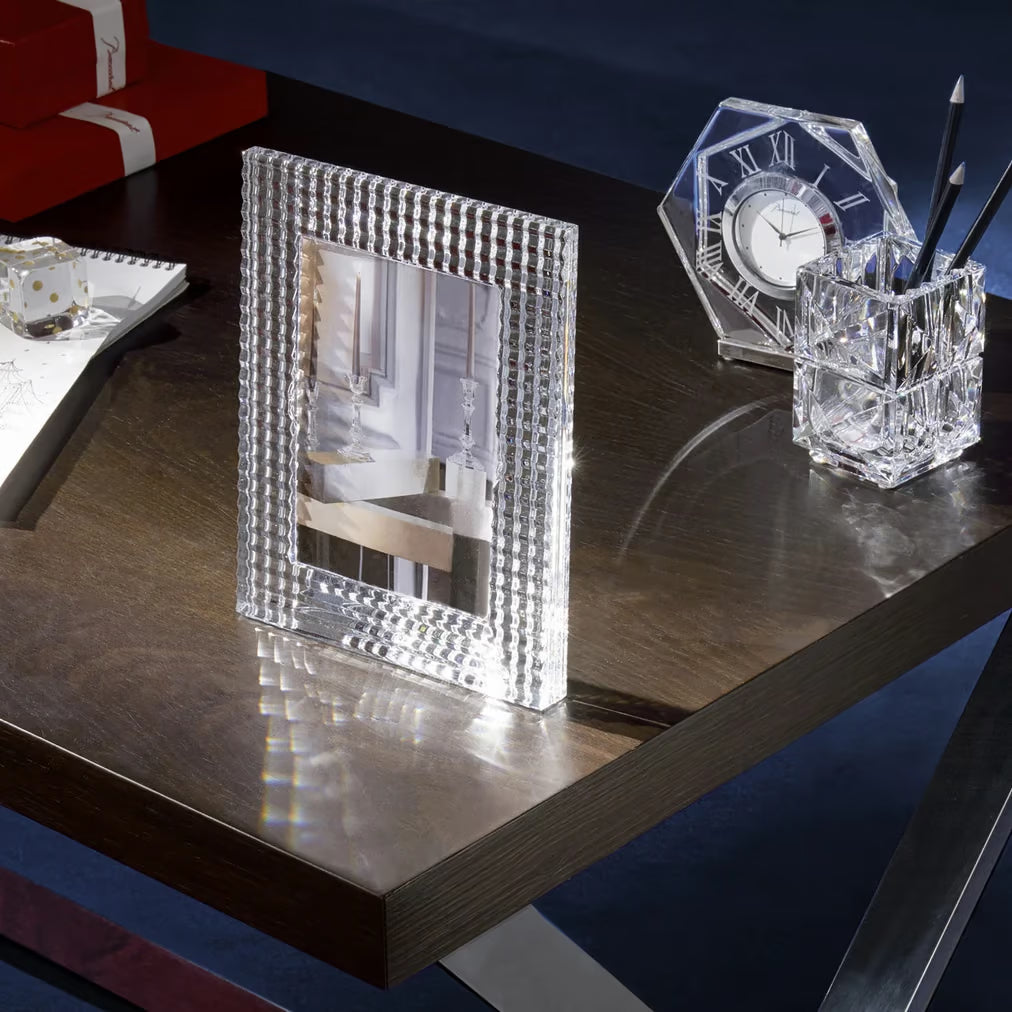
- It sparkles more. Crystal bends light more sharply than glass, so light breaks into little rainbows at every cut. That's the flash you see on a cut tumbler.
- It's heavier. Crystal is about 30% heavier than ordinary glass. Pick up two glasses of the same size and you'll feel the difference right away.
- It can be made thinner and cut deeper. Crystal is easier to shape while it's hot and easier to cut once it cools. That's how you get a paper-thin wine glass rim or a deeply carved decanter.
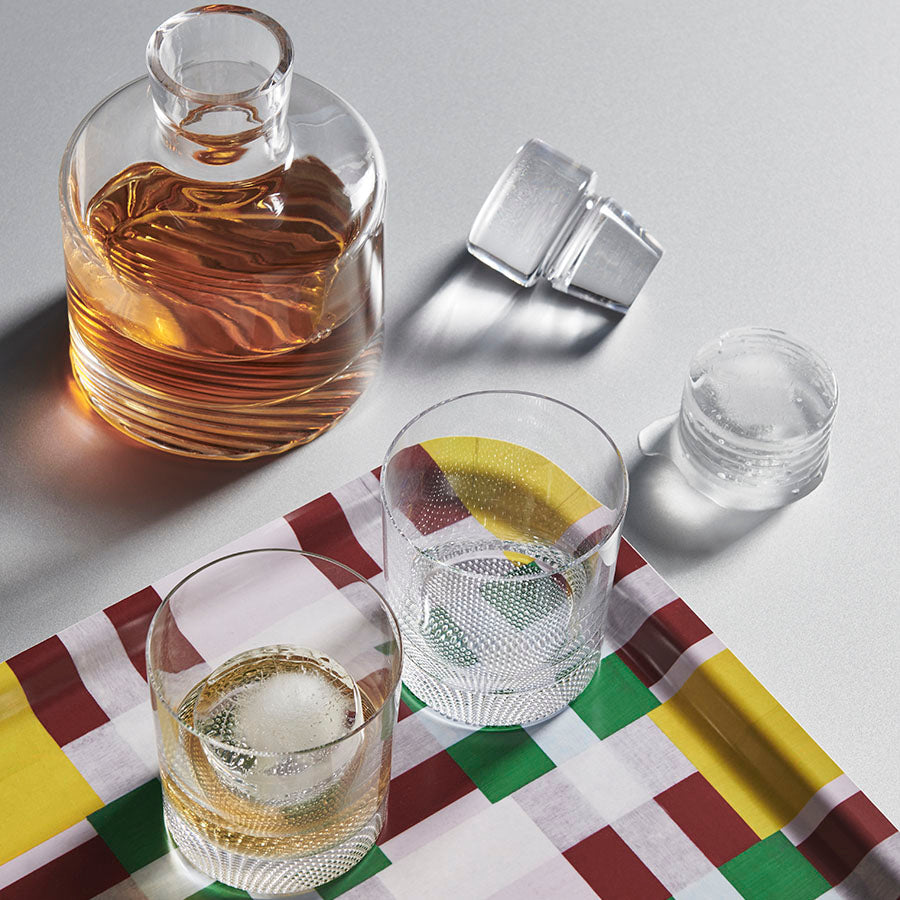
- It rings. Tap a crystal glass and it holds a long, clear note. Ordinary glass just goes "clink."
Crystal as we know it was invented in England in the 1670s.
How much metal oxide makes something "crystal" depends on where you buy it. In Europe, lead crystal must contain at least 24% lead oxide, and Baccarat's contains 31.7%. In the United States the word has no legal minimum, so a crystal label alone tells you little. Trust the maker, not the label.
From the shop: The fastest way we've found to explain crystal is to hand someone two glasses, one ordinary and one Baccarat, and let them hold one in each hand. Nobody needs the chemistry after that. The weight and the sparkle do the explaining.
Why crystal is so expensive
The price isn't one thing. It's five, stacked.
- The melt. Baccarat heats its raw materials, including lead oxide, silica and potash, to about 1,450°C over 36 hours. That's a long, energy-heavy process before anyone touches the glass.
- Hand work at every stage. Fine pieces are gathered, blown or pressed, then cut on a wheel and polished by hand. A heavily cut piece passes through many specialists, each with years of training.
- Rejection. A bubble, a stone or a misjudged cut ends the piece. Because it can't be repaired, flawed work is broken up and remelted, and the cost of those pieces is carried by the ones that pass.
- The material itself. Lead crystal's softness is what makes it cut so beautifully, and also what makes it unforgiving to handle at every step.
- The design archive. Houses like Baccarat and Saint Louis sell patterns developed over centuries, and their molds, cuts and marks are part of what you're buying.
The price looks different over a lifetime. A Baccarat Château red wine glass works out to $160 per glass, and with hand washing it will outlast every set of ordinary glasses you'd buy in the same years.
From the shop: The question we hear most at the counter is "why does this cost ten times more than a glass that looks similar online?" The answer is usually in the hand: the weight, the rim, the way light moves through a cut. Once customers hold both, the price makes more sense.
Lead crystal vs. lead-free crystal
Lead-free crystal isn't a lesser copy. It's a different material with different strengths.
The practical rule: buy lead crystal for cut pieces, decanters, vases and anything meant to be looked at. Lead-free crystal makes excellent everyday stemware.
Note what this means for a common claim: crystal is not automatically "stronger" or "more scratch resistant" than glass. Lead crystal is softer than ordinary glass. It can be blown thin because it's more workable, not because it's tougher.
From the shop: When customers ask us which to buy, we ask how they'll use it. Glasses that will be used every night and run through a dishwasher should be lead-free. A decanter, a vase or a set of cut tumblers that will be handled with care deserves full lead crystal.
How to tell if glass is really crystal
- Weigh it in your hand. Crystal is about 30% denser than ordinary glass, so a crystal piece feels noticeably heavy for its size.
- Tap the rim gently. Crystal holds a clear, sustained ring; glass gives a short clink. One caveat: lead-free crystal rings too, so a ring proves crystal, not lead.
- Hold it to the light. Look for rainbow flashes at the cut edges.
- Feel the rim. Fine crystal stemware usually has a thin, smooth rim. A thick rolled bead around the edge points to machine-made glass.
- Look for a mark. Major houses mark their pieces, usually acid-etched on the base.
The edge cases: heavy pressed glass can pass the weight test, and the light test works on any well-cut glass. Only a lab test can confirm lead content in an unmarked or antique piece.
Is it safe to drink from lead crystal?
Serving from lead crystal is considered low risk. Storing drinks in it is not.
Lead migrates slowly from the glass into liquid, and it migrates faster into acidic and alcoholic drinks and the longer they sit. In one study of port wine kept in lead crystal decanters, lead measured 89 µg/L after two days and 2,000 to 5,000 µg/L after four months. Brandy stored for five years or more reached about 20,000 µg/L. Leaching also falls with repeated use as the surface lead depletes.
In practice:
- Decant the day you serve. A lead crystal decanter is for presenting wine or spirits, not storing them.
- Pour from it, don't keep in it. Move leftover spirits back to their bottle.
- Use lead-free crystal for daily use by children or during pregnancy, where lead exposure guidance is strictest.
From the shop: We tell everyone who buys a decanter the same thing: fill it for the evening, empty it at the end of it. It's the one care rule that matters more than any other.
Cloudy crystal: film or etching?
Cloudiness has two causes, and only one can be fixed.
- Mineral film from hard water sits on the surface. Wipe the cloudy area with white vinegar. If it clears and stays clear once dry, it was film.
- Etching is damage to the surface itself, usually from dishwasher detergent and heat. Vinegar won't touch it, and it's permanent. Lead crystal is especially vulnerable because it's soft.
The vinegar test takes a minute and saves you from scrubbing a glass that can't be saved.
How to care for crystal
- Hand wash in warm, not hot, water with a mild detergent and a soft sponge. Lay a towel in the sink.
- One piece at a time. Most crystal breaks by knocking into other crystal, not by being dropped.
- Avoid temperature shocks. Don't move a glass from hot water to cold, or fill a cold decanter with hot liquid.
- Polish while it's wet with a lint-free cloth, holding the bowl rather than twisting at the stem.
- Store upright, not on the rim, which is the thinnest and most fragile part.
- For film, soak in white vinegar for about 15 minutes, then rinse.
From the shop: The breakages people tell us about almost never happen at the table. They happen at the sink, when a stem gets twisted while drying or two glasses meet in the dishwater.
The crystal houses worth knowing
- Baccarat (France, 1764): the benchmark for hand-cut crystal, at 31.7% lead oxide.
- Saint Louis (France): glassmaking roots going back to 1586, known for deep cuts and colored crystal.
- Lalique (France): Art Deco design and frosted, sculptural crystal.
- Orrefors and Kosta Boda (Sweden): cleaner, modern Scandinavian design.
Shop the edit

Frequently asked questions
Is crystal stronger than glass?
Not necessarily. Lead crystal is softer than ordinary glass and scratches more easily. Lead-free crystal is often tougher. Crystal can be blown thinner because it's more workable, not because it's stronger.
Is crystal porous?
No. Crystal isn't porous. It shouldn't go in the dishwasher because detergent and heat can permanently etch its soft surface.
Does crystal make wine taste better?
The material doesn't change the wine. What helps is what crystal makes possible: a thin rim and a precisely shaped bowl, which affect how the wine reaches you and how its aroma collects.
Can crystal go in the dishwasher?
Lead crystal, no. Some lead-free crystal can; follow the maker's instructions.
How much lead is in Baccarat crystal?
31.7% lead oxide. That's what gives Baccarat its weight and its fire.
FOR MORE ENTERTAINING IDEAS, VISIT US ON INSTAGRAM @PARCIPARLAHOME.